The Bleeker Report Volume I · MMXXVI

Ten Stocks
for the
AI Buildout

A complete picks-and-shovels portfolio, covering every layer of the infrastructure that AI requires to function at scale.

Dear Fellow Investor,

I have a 15-year track record of recommending NVIDIA to millions of investors.

In 2010, twelve years before ChatGPT launched, I declared NVIDIA "The Top Stock to Buy" in a report you can still find by Googling my name. That pick is up over 80,000%.

In 2015, I hosted a webinar called "Tier Zero" laying out how NVIDIA would dominate the coming AI revolution. That specific recommendation is up 10,494% today.

In January 2019, when NVIDIA had crashed 50% and Wall Street declared the AI story dead, I bought $50,000 of my own money at what turned out to be the exact bottom. That investment is up 3,100%.

In 2024, I did something even bolder. I committed $500,000 of my own money to a public AI portfolio and showed investors exactly how to invest in the AI infrastructure buildout in real time.

The results? The average recommendation has returned roughly 128%. Several picks are up 200%, 400%, even 700% in a matter of months.

If you signed up to get this list, you already know the basic premise: the AI buildout is the single largest capital deployment cycle in modern history, and most investors are either sitting it out entirely or only touching one or two names at the top of the stack. I want to walk you through all ten picks I'm watching, explain exactly where each one fits in the architecture of this buildout, and give you the honest reasoning behind each position.

I've been studying the semiconductor and data center infrastructure space pretty much every day for the better part of fifteen years, and I've never seen demand signals stack up quite like this. The spending isn't slowing. If anything, the hyperscalers are accelerating. Let's get into it.

The Framework

Think in Layers

Building an AI data center is like building a city. You need the processors that do the thinking. The tools that make those processors. The optical plumbing that moves data between chips. And the power and cooling that keeps everything from melting.

Each of these ten stocks lives in one of those four layers. Together, they give you exposure across the entire stack without betting everything on a single name.

I.

Compute

The processors that do the thinking. GPUs, CPUs, and the economics of scale.

II.

Equipment

The machines that make the chips, inspect them, package them, and test them.

III.

Optics

The light-based plumbing that moves data between processors at 800G, 1.6T, 3.2T.

IV.

Power

The electricity, thermal management, and cooling that keep the whole thing alive.

Layer One

The Compute

Stocks № 01 & 02
Compute № 01
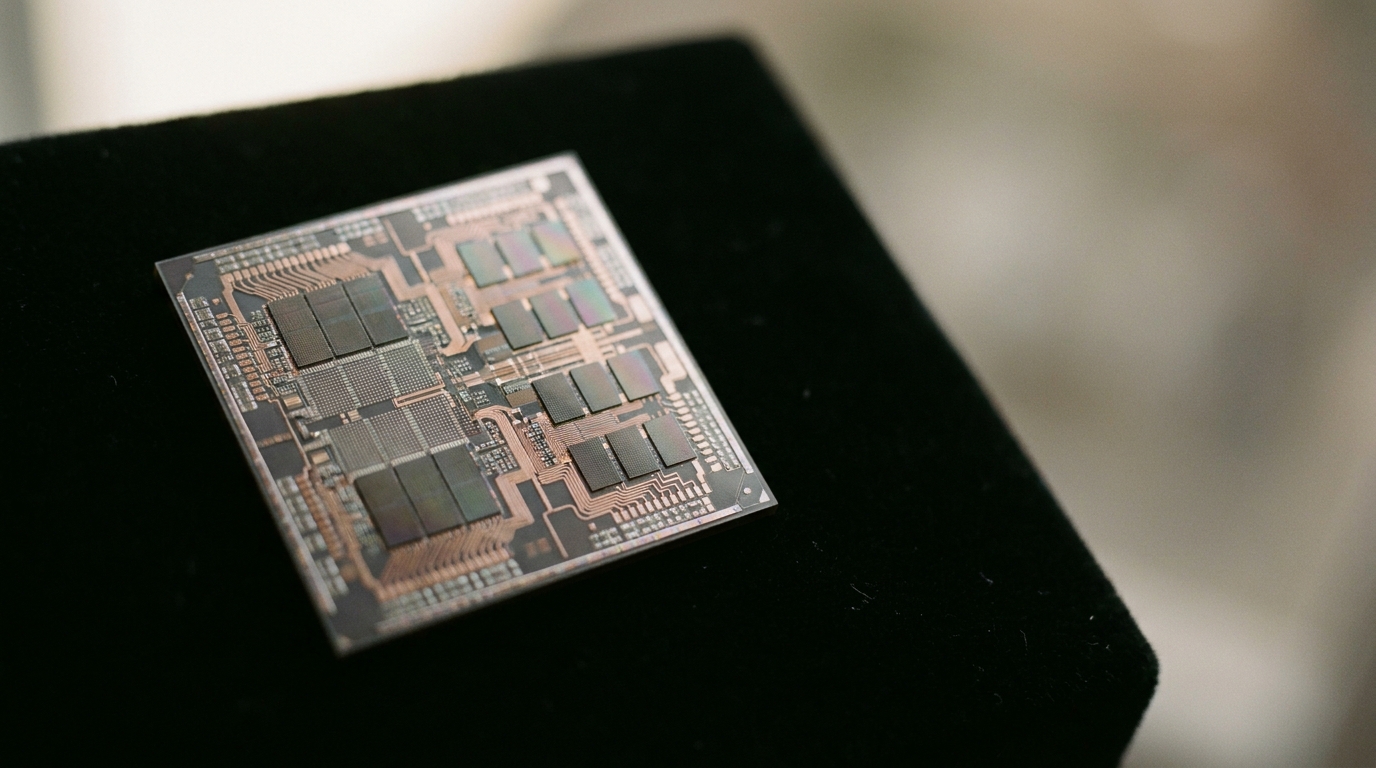
Close-up of an NVIDIA silicon die on matte black velvet

NVIDIA

NASDAQ · NVDA

Largest conviction in the AI compute layer.

I bought Nvidia at 31 cents in June 2010, and I'll be honest with you: I still think Wall Street is underestimating this company's durability into 2027 and beyond. That probably sounds strange given its scale, but hear me out.

Consensus EPS estimates have climbed above $8 and continue to trend higher. My own estimate is $9 to $10. If you believe $10 EPS is achievable, Nvidia trades at less than 20× forward earnings for a company doubling profits year over year. That's not an expensive multiple for the company supplying the picks and shovels of the most important technology transition of our lifetimes.

Nvidia's trajectory tells you everything. Quarterly revenue has been growing more than 70% year over year. Data center revenue is growing even faster, with networking inside the data center accelerating at triple-digit rates. Forward guidance deliberately excludes China data center compute, which means any normalization there is pure upside.

Computing demand is growing exponentially. The agentic AI inflection point has arrived. Jensen Huang, CEO

OpenAI has committed $100 billion tied to roughly 10 gigawatts of GPU purchases, with Nvidia funding somewhere between 15% and 20% of the buildout. Broadcom, one of Nvidia's closest ecosystem partners, guided $22 billion for a recent quarter against a Street expectation of $20.5 billion, and said 2027 is when its biggest growth flows. That matters for Nvidia too.

Nvidia remains my single largest conviction in the AI compute layer.

Ticker
NVDA
Layer
Compute
Role
AI GPUs
Thesis
Core Holding
Compute № 02
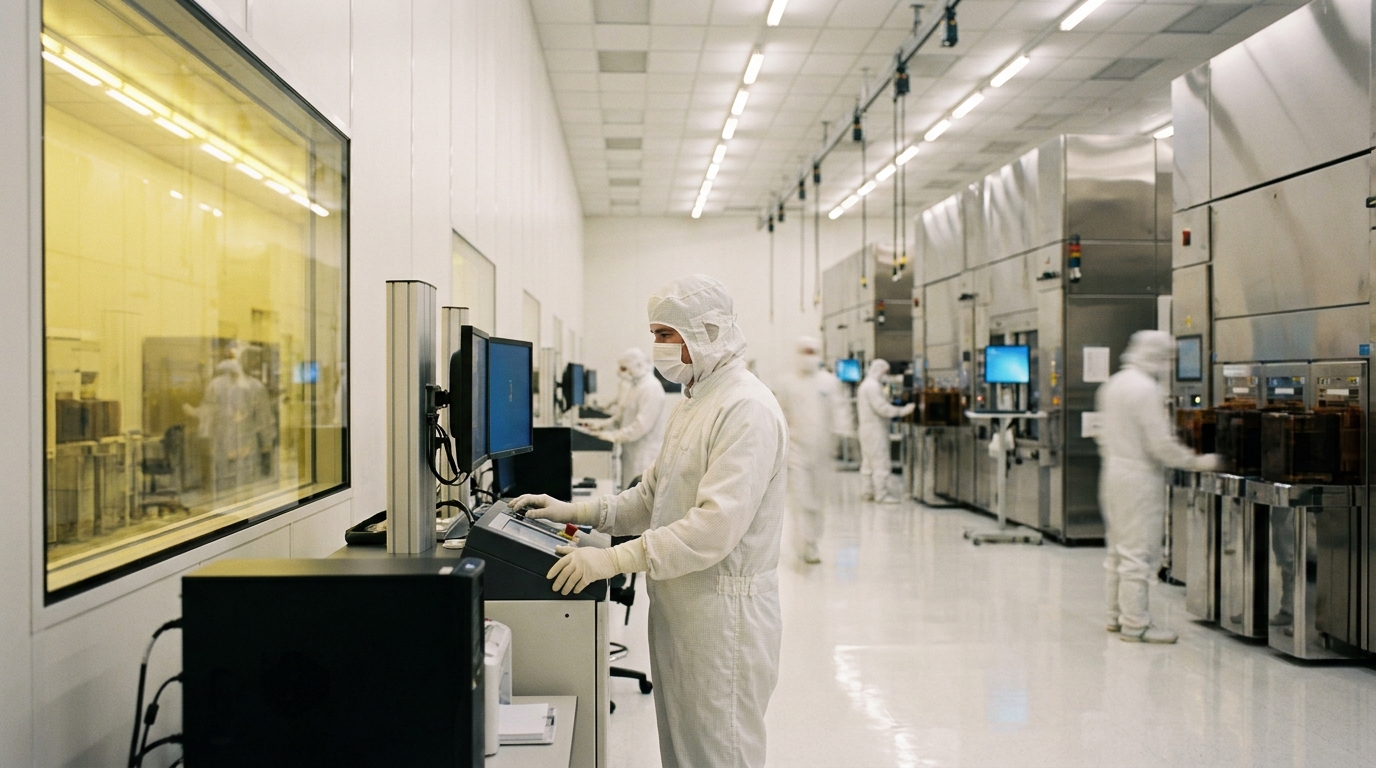
Engineers in bunny suits inside an Intel semiconductor cleanroom

Intel

NASDAQ · INTC

A contrarian bet on two catalysts the market has not priced.

This one is contrarian, and I want to be upfront about that. Intel is not a comfortable buy. It's a bet on two specific catalysts that I believe are real and that the market has not priced in at all.

The first catalyst is a genuine CPU shortage. Lead times for CPUs have stretched from one or two weeks to six months as agentic AI workloads require far more general-purpose compute than the market anticipated. ARM Holdings jumped 18% on the CPU pricing and shortage news, which tells you this isn't a minor supply hiccup. It's a structural demand shift.

The second catalyst is the foundry turnaround. Apple is deep in qualifying Intel's foundry, and that process is expected to complete relatively soon. The hyperscalers, Meta, Amazon, Google, and Microsoft, are all American companies developing their own chip programs, and there is real political pressure to manufacture those chips in the United States. TSMC makes 90% of advanced chips in a potential war zone. That's a geopolitical risk that every large American tech company is actively trying to reduce. Intel is the only credible domestic alternative at advanced nodes.

Nvidia has also committed to using Intel for advanced packaging, which is a meaningful endorsement.

Our conviction in the essential role of CPUs in the AI era continues to grow. Lip-Bu Tan, CEO

The thesis is intact.

Ticker
INTC
Layer
Compute
Role
CPUs / Foundry
Thesis
Contrarian
Layer Two

The Equipment

Stocks № 03 through 06
Equipment № 03
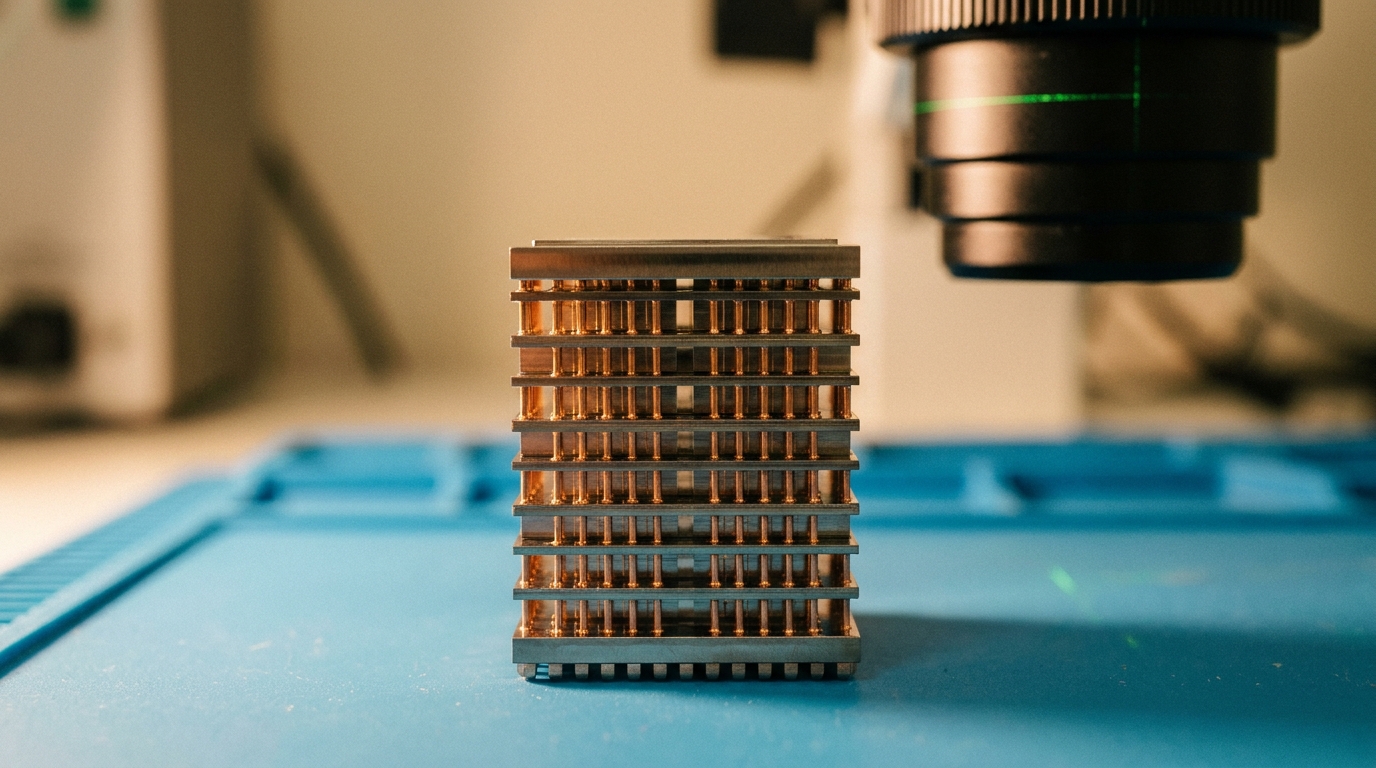
A stacked HBM memory package beneath a metrology microscope

Onto Innovation

NYSE · ONTO

The quality-control station on a very expensive assembly line.

If you want to understand where the equipment money is actually flowing inside semiconductor manufacturing, the answer right now is advanced packaging. That's where chips get stacked on top of each other in three dimensions to achieve the density that AI workloads demand. And the company that inspects and measures those packages, making sure they're built correctly, is Onto Innovation.

Think of it like a quality control station on a very expensive assembly line. Every chip that gets packaged for AI needs to be checked. Onto makes the tools that do the checking.

The company recently crossed $1 billion in annual revenue for the first time. More importantly, one memory customer nearly doubled its backlog with a $240 million volume purchase agreement for Dragonfly 2D inspection and 3D bump metrology systems through 2027.

Global AI investment fueling a robust upcycle in semiconductor capital equipment spending. Mike Plisinski, CEO

I see two waves of demand here. The first is the HBM3 to HBM4 scaling cycle, which is already underway. The second is co-packaged optics, where optical components get integrated directly onto the chip package, pulling Onto's metrology equipment into an entirely new application. Onto already generates 61% of its revenue from AI-related applications, and that share is climbing.

Shares were down about 15% on geopolitical and recession concerns when I first recommended Onto. That entry has only looked better with every earnings report since.

Ticker
ONTO
Layer
Equipment
Role
Packaging Metrology
AI Revenue
61%
Equipment № 04
A single-wafer wet processing tool inside a cleanroom

ACM Research

NASDAQ · ACMR

A diversifier. The counter-cyclical play in the portfolio.

ACM Research is a diversifier in this portfolio, and it benefits from something that actually hurts most other semiconductor equipment companies: the Chinese buildout.

Here's the dynamic. Western memory makers, Micron, SK Hynix, and Samsung, are staying disciplined on output. China's CXMT wants to flood the market with its own memory. To do that, CXMT needs equipment. And ACM Research, which has built deep relationships inside the Chinese semiconductor industry, is one of the primary suppliers of that equipment. ACM also has growing traction in Korea with SK Hynix.

Revenue has grown from $157 million in 2020 to $901 million in its most recent fiscal year. The company's long-term target is $4 billion. Forward revenue guidance implies 21% to 30% growth year over year.

We have the customers, the products, the capacity and the capital to execute on our global business plan. David Wang, CEO

The stock sold off hard on short-term concerns, and that's exactly the entry point I was looking for. Analyst consensus price targets still imply meaningful upside from where shares trade.

Ticker
ACMR
Layer
Equipment
Revenue Growth
5.7× since 2020
Long-Term Target
$4B
Equipment № 05
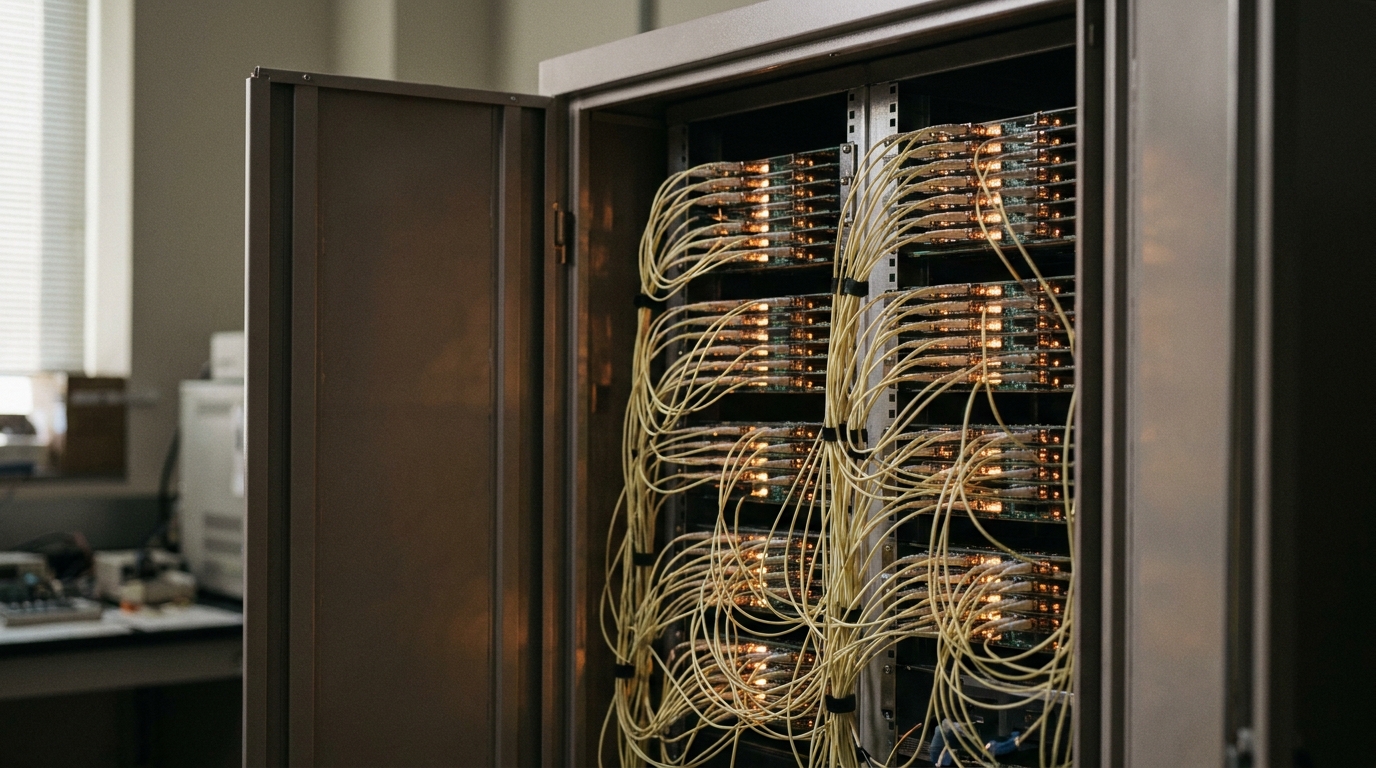
A semiconductor burn-in test rack with amber glow and fiber optic pigtails

Aehr Test Systems

NASDAQ · AEHR

Small, speculative, compelling. The pivot is the story.

I'll be straight with you: this one is small and speculative. But the story is compelling enough that I wanted it in this portfolio.

Aehr makes burn-in and test equipment for semiconductors. For the past few years, its primary market was electric vehicle power chips, and that market has been brutal. Revenue has been falling. The company did $66 million in revenue in 2024, $59 million in 2025, and is expected to do around $47 million in 2026. On the surface, that looks like a broken story.

But here's what I'm watching. Aehr is actively pivoting into silicon photonics for data center optical interconnects, memory testing, and custom ASICs for AI accelerators. A recent quarter showed bookings of $37.2 million with a book-to-bill ratio exceeding 3.5×. That's an extraordinary bookings number relative to current revenue.

More than $37 million in quarterly bookings and a book-to-bill ratio exceeding 3.5×. Demand continues to accelerate. Gayn Erickson, CEO

The company also secured a production win for its Sonoma PLBI systems for next-generation AI accelerators and added a new silicon photonics customer for data center optical interconnects. Management expects a significant revenue rebound in 2027. The pivot is the story here.

Ticker
AEHR
Layer
Equipment
Book-to-Bill
3.5×
Thesis
Pivot Play
Equipment № 06
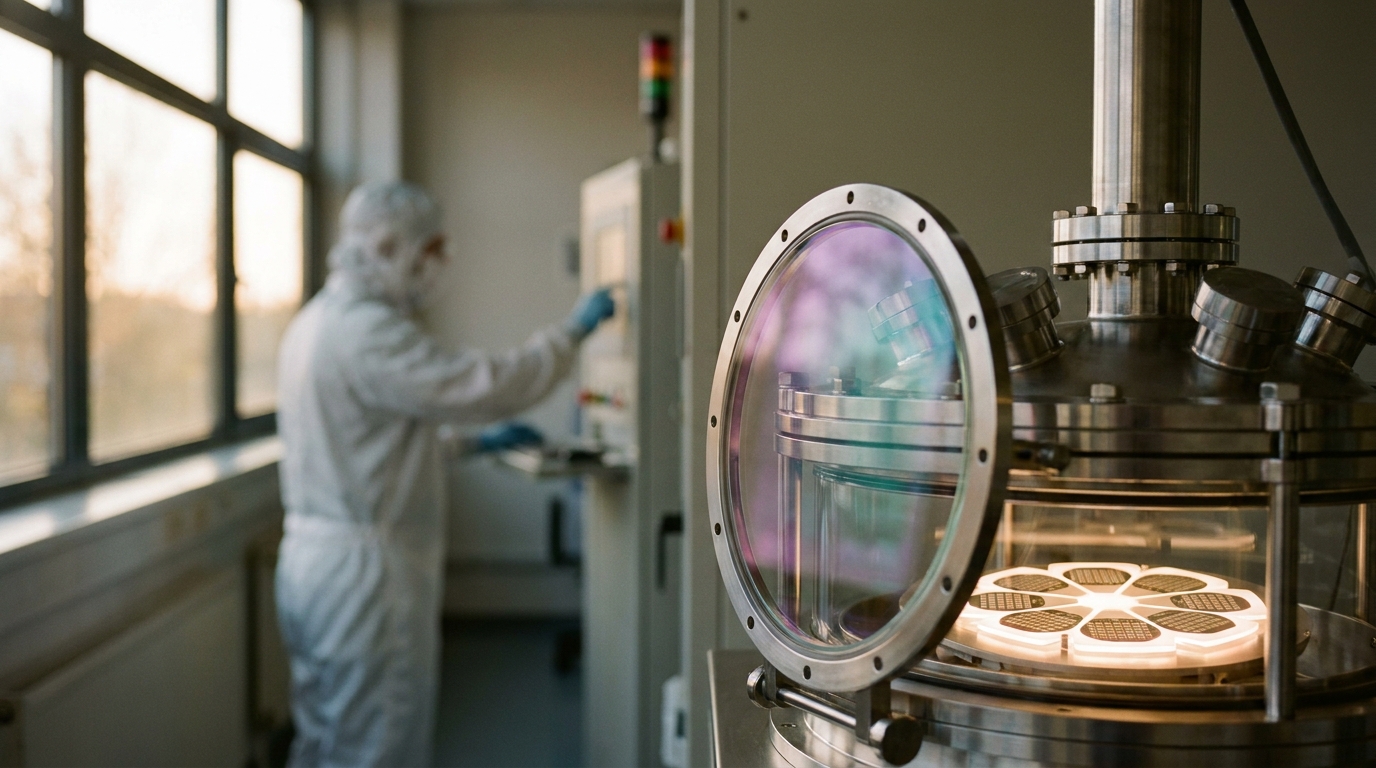
A vapor deposition reactor chamber at a specialty semiconductor facility

Aixtron

OTC · AIXXF

GaN, SiC, InP. Three compounds that matter for two AI waves at once.

Aixtron is the most obscure name on this list. It primarily trades on Germany's stock exchange, with a thinly-traded OTC listing in the U.S. under AIXXF. Volume averages roughly 8,000 shares per day, so use limit orders if you're buying. Don't market-buy this one. I wanted it in this portfolio because very few investors own it yet, and I think that changes over the next 24 months.

The company in one sentence: Aixtron builds vapor deposition equipment for non-silicon semiconductor materials, specifically gallium nitride (GaN), silicon carbide (SiC), and indium phosphide (InP). Those three compounds are the exact materials that matter for two different AI waves happening at the same time.

First, indium phosphide is the starting point for optical transceivers. Silicon is a poor material for generating light, so every optical module in a data center eventually traces back to an InP wafer. As optics scale toward co-packaged architectures and 1.6T and 3.2T networking, demand for InP capacity explodes. AXT Inc., which makes the wafers at the front of that supply chain, has seen its stock appreciate roughly 2,000% in a year. That tells you how acute the bottleneck already is.

Second, gallium nitride and silicon carbide are the workhorse materials for 800V power management, which is the architecture Nvidia's Vera Rubin platform requires. Every data center rack that moves from 54V to 800V becomes a demand pull for Aixtron equipment.

The catch, and the reason the stock is still depressed, is that Aixtron's legacy business served the electric vehicle market, which has been brutal for years. Earnings have been cut roughly in half since 2022. That's the entire bear case. I believe the next 24 months flip that entirely as the optics bottleneck and the 800V power transition both land on Aixtron's order book at the same time.

If you're buying, be patient with those limit orders. Don't chase.

Ticker
AIXXF
Layer
Equipment
Materials
GaN · SiC · InP
Note
Use Limit Orders
Layer Three

The Optics

Stock № 07
Optics № 07
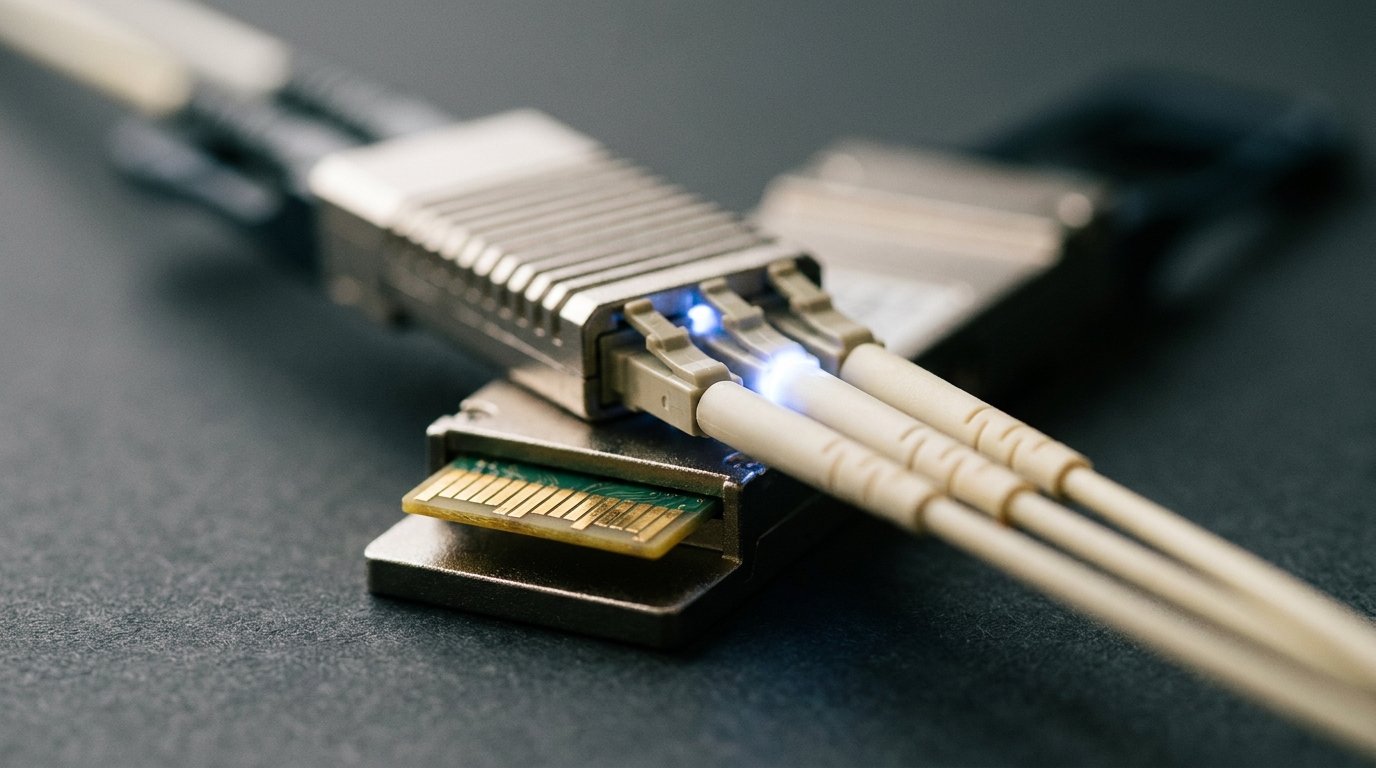
Macro photograph of an 800G optical transceiver module with glowing fiber tips

Semtech

NASDAQ · SMTC

The optics play nobody is talking about. That's part of the appeal.

Semtech is the optics play in this portfolio, and it's one I don't see many people talking about. That's part of the appeal.

The company makes trans-impedance amplifiers, which are the components that convert faint light pulses into electrical signals inside optical modules. Every time the data center industry upgrades to a faster optical standard, Semtech's content per module roughly triples. At 800G, Semtech earns roughly $10 per module. At 1.6T, that jumps to about $30. At 3.2T, it's approximately $80. The data center networking buildout is marching through all three of those transitions right now.

Semtech's Signal Integrity segment has been growing 25% year over year, with gross margins of 67.4%. Annual revenue recently crossed $1 billion for the first time, up 15% year over year.

We believe we are uniquely positioned as data center buildout expands, with a broad set of solutions purpose-built for the 800G, 1.6T, and 3.2T era. Hong Hou, CEO

The stock is still well below its 2023 peak because the industrial and IoT markets that make up the majority of its current revenue have been depressed. That's a cyclical headwind, and cyclical headwinds resolve. EPS peaked at $2.88 in 2023, fell to $0.14 in fiscal 2025, and is projected to recover to roughly $2.20 in fiscal 2026. The combination of cyclical recovery and data center content growth is underappreciated.

Ticker
SMTC
Layer
Optics
Content at 3.2T
$80 / module
Gross Margin
67.4%
Layer Four

Power & Infrastructure

Stocks № 08 through 10
Power № 08
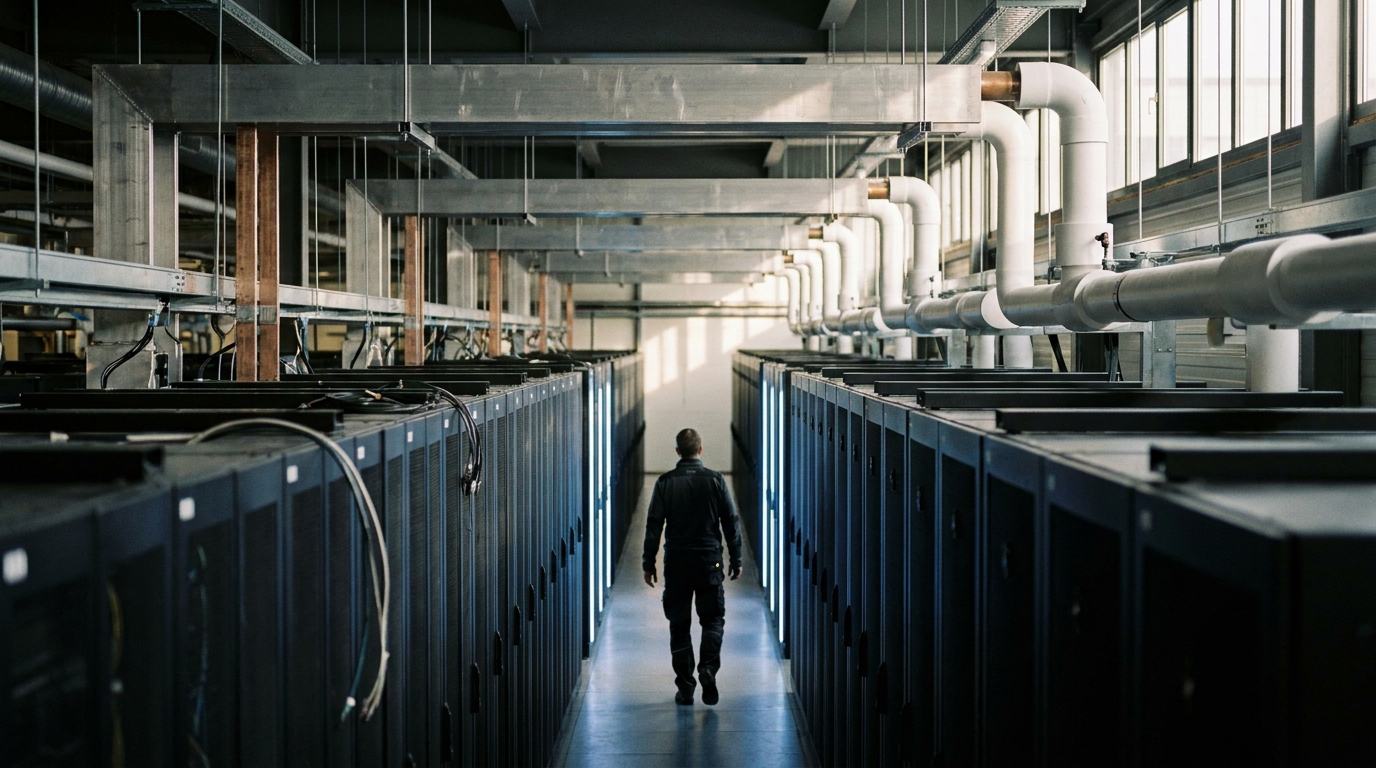
A wide view down a data center aisle with liquid cooling manifolds overhead

Vertiv

NYSE · VRT

The non-speculative core. Conviction has only grown.

Vertiv is the non-speculative core of this portfolio. I originally recommended it in October 2025, and my conviction has only grown since.

The company makes the power distribution, thermal management, and cooling systems that keep data centers running. As Nvidia shifts to its 800V architecture for next-generation AI infrastructure, the power and cooling requirements per rack increase dramatically. Vertiv is positioned directly in that transition.

The numbers are exceptional. Organic orders recently grew 252% year over year in a single quarter, the strongest order quarter in company history. Backlog has climbed to $15 billion, up 109% year over year. The book-to-bill ratio is approximately 2.9×, which means for every dollar of revenue recognized, the company is booking nearly three dollars of new orders. That's extraordinary visibility.

Our record backlog provides clear visibility into what we expect to be another year of significant growth. Giordano Albertazzi, CEO

2026 guidance calls for net sales of $13.25 billion to $13.75 billion and adjusted EPS of $5.97 to $6.07, representing 42% to 45% growth versus 2025. AMD's investor day raised its data center total addressable market estimate from $200 billion in 2025 to over $1 trillion by 2030. Vertiv is the infrastructure company serving that market.

Ticker
VRT
Layer
Power
Backlog
$15B
Book-to-Bill
2.9×
Power № 09
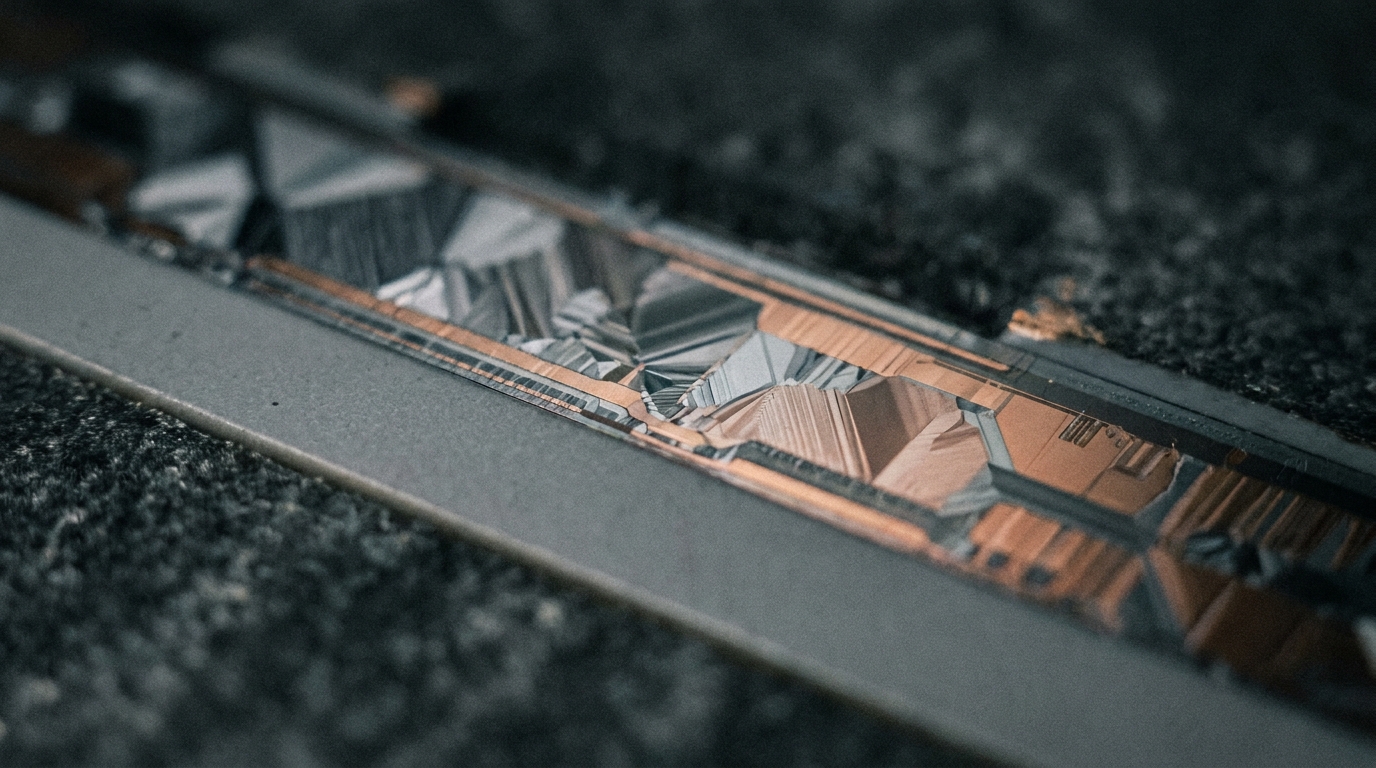
Cross-section of a gallium nitride power transistor

onsemi

NASDAQ · ON

The cleanest way to own the 800V transition at lower volatility.

ON Semiconductor is a lower-volatility way to own the same 800V power transition that makes Vertiv so compelling. Where Vertiv owns the data center infrastructure layer, onsemi owns the chip layer inside that infrastructure.

The company's primary markets today are automotive and industrial, both of which have been going through a cyclical downturn. I expect both to recover. When they do, onsemi gets a tailwind from two directions simultaneously. And sitting on top of that is an emerging data center business that I think will become a meaningful third revenue pillar.

EPS estimates run $2.91 in 2026, $4.03 in 2027, and $5.36 in 2028. That's a steep growth trajectory if automotive and industrial recover on schedule and data center scales as expected. The company also just announced new GaN partnerships with Innoscience for 200mm GaN-on-silicon and GlobalFoundries for 650V GaN, positioning it directly in the next-generation power semiconductor transition.

Lead in automotive, industrial, and AI data center power with innovation that delivers higher-value solutions. Hassane El-Khoury, CEO

This is one of the cleanest ways to own the 800V power transition at lower volatility than the pure-plays.

Ticker
ON
Layer
Power
2028 EPS Est.
$5.36
Thesis
Lower-Vol 800V
Power № 10
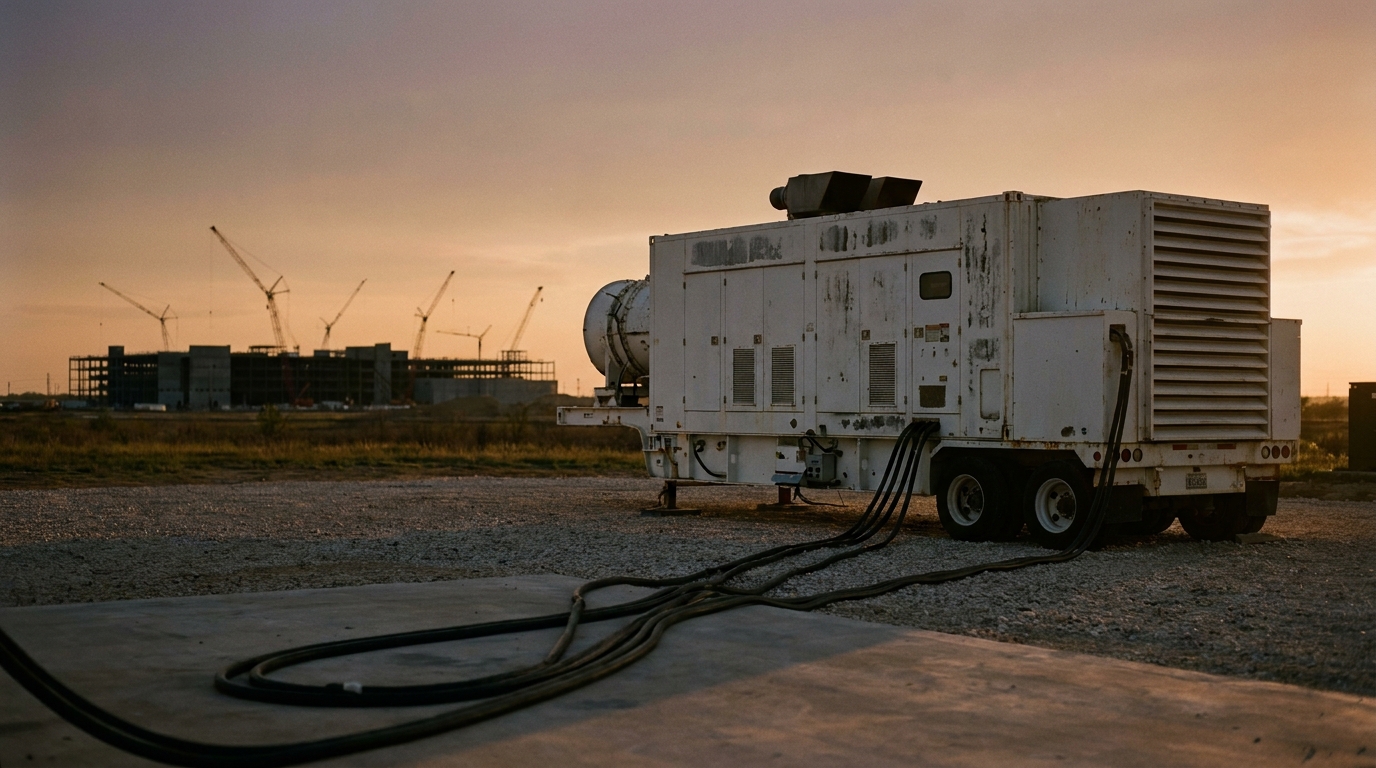
A mobile natural gas turbine generator on a gravel pad with a data center under construction in the distance

Liberty Energy

NYSE · LBRT

The wildcard. A fracking supply chain redirected at data center power.

And finally, the wildcard.

Liberty Energy is an oilfield services company, specifically a hydraulic fracturing business. That description probably makes you wonder what it's doing in an AI buildout portfolio. Here's the answer: the power bottleneck for AI data centers is real, and the fastest path to solving it runs through off-grid distributed power generation. Liberty has spent years building turbine, engine, and power management infrastructure for the fracking industry. That same supply chain is now being redirected at data center power.

The company's Liberty Power Innovations subsidiary announced a 1 gigawatt development agreement with Vantage Data Centers, including a firm 400 megawatt reservation for 2027, and a separate 330 megawatt Texas data center power project with phased operations beginning in Q4 2027. The long-term target is 3 gigawatts of distributed power deployment by 2029.

Liberty has evolved from a premier North American completions company into a diversified energy technology and power infrastructure platform. Ron Gusek, CEO

If Liberty hits its 3 gigawatt target, revenue could double from its current $4 billion base. That's a big if, but behind-the-meter power is one of the real bottlenecks in the AI buildout, and very few companies have the supply chain to move quickly. Liberty does.

Ticker
LBRT
Layer
Power
2029 Target
3 GW
Thesis
Wildcard
In Closing

Putting it together.

Ten stocks. Four layers of the AI buildout stack. Each one chosen because it sits at a specific chokepoint in the infrastructure that AI requires to function at scale.

The unifying thesis is simple: the hyperscalers are spending at a pace that has no historical precedent, and that spending has to flow through compute chips, then through the equipment that makes those chips, then through the optical networks that connect them, then through the power and cooling systems that keep them alive. Every stock in this portfolio sits somewhere on that chain.

Every earnings cycle surfaces fresh data about the pace of this buildout. The signal has been remarkably consistent: order books growing faster than revenue, revenue growing faster than guidance, and guidance stepping up.

What I keep coming back to is how early we still are. The models changing the world right now (Claude, GPT, Gemini) were trained on hardware designed years ago. The next generation will train on infrastructure that doesn't exist yet. That infrastructure is what these ten companies are building.

When I look five years out, I see a technology transition that rewrites software, science, medicine, and the cost structure of almost every business. The companies supplying the picks and shovels of that transition are going to do extraordinarily well. The buildout is already in motion, and the order books confirm it.

That's why I wrote this report. I want you in front of this wave.

To your wealth, Eric Bleeker